
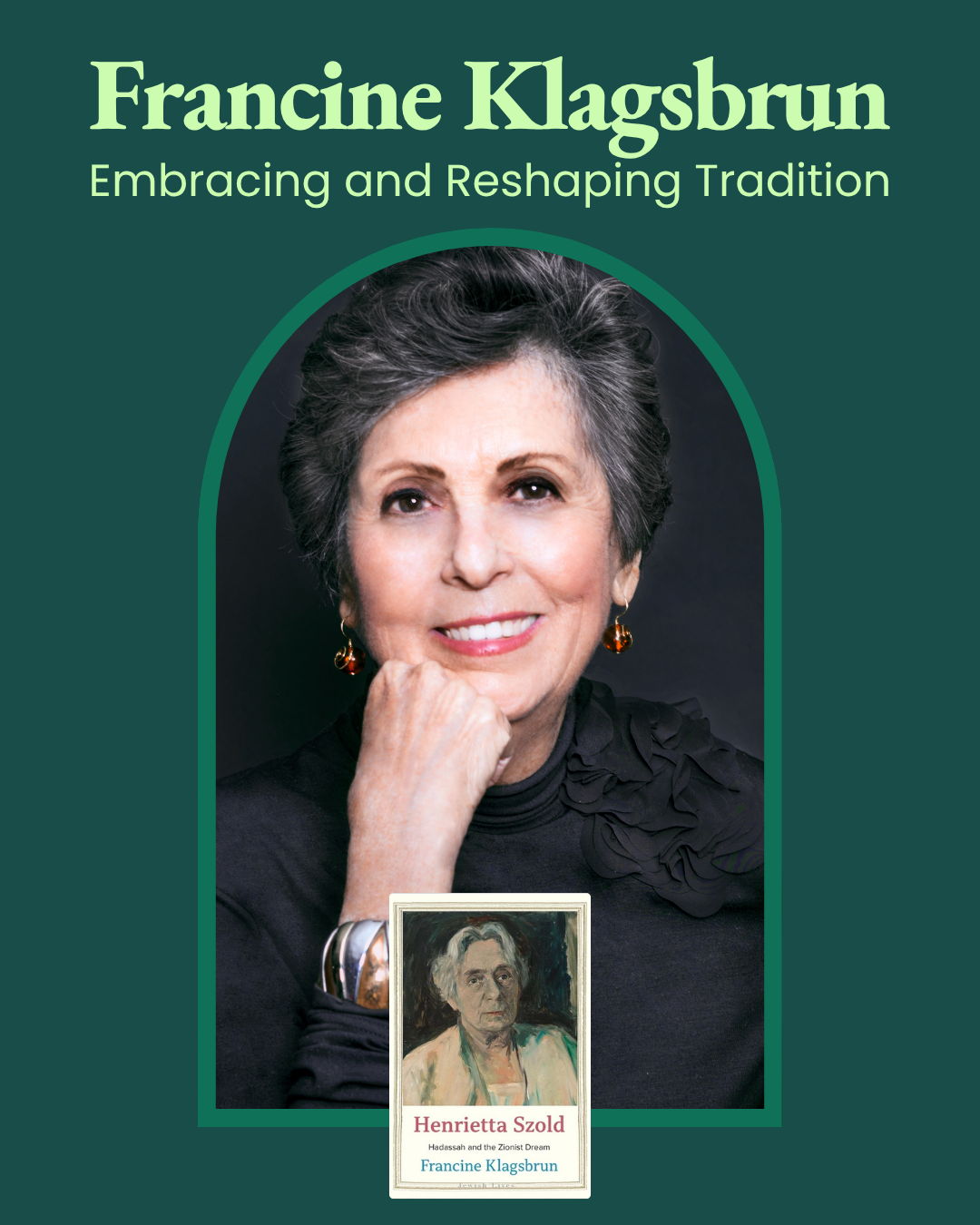
Episode 57: Francine Klagsbrun
Charming and wry, nonagenarian Francine Klagsbrun reflects on her unlikely Jewish education as a girl in the 1930s and 40s, on the seeds of her feminist activism, and on why she is grateful to have reinvigorated Henrietta Szold’s legacy.
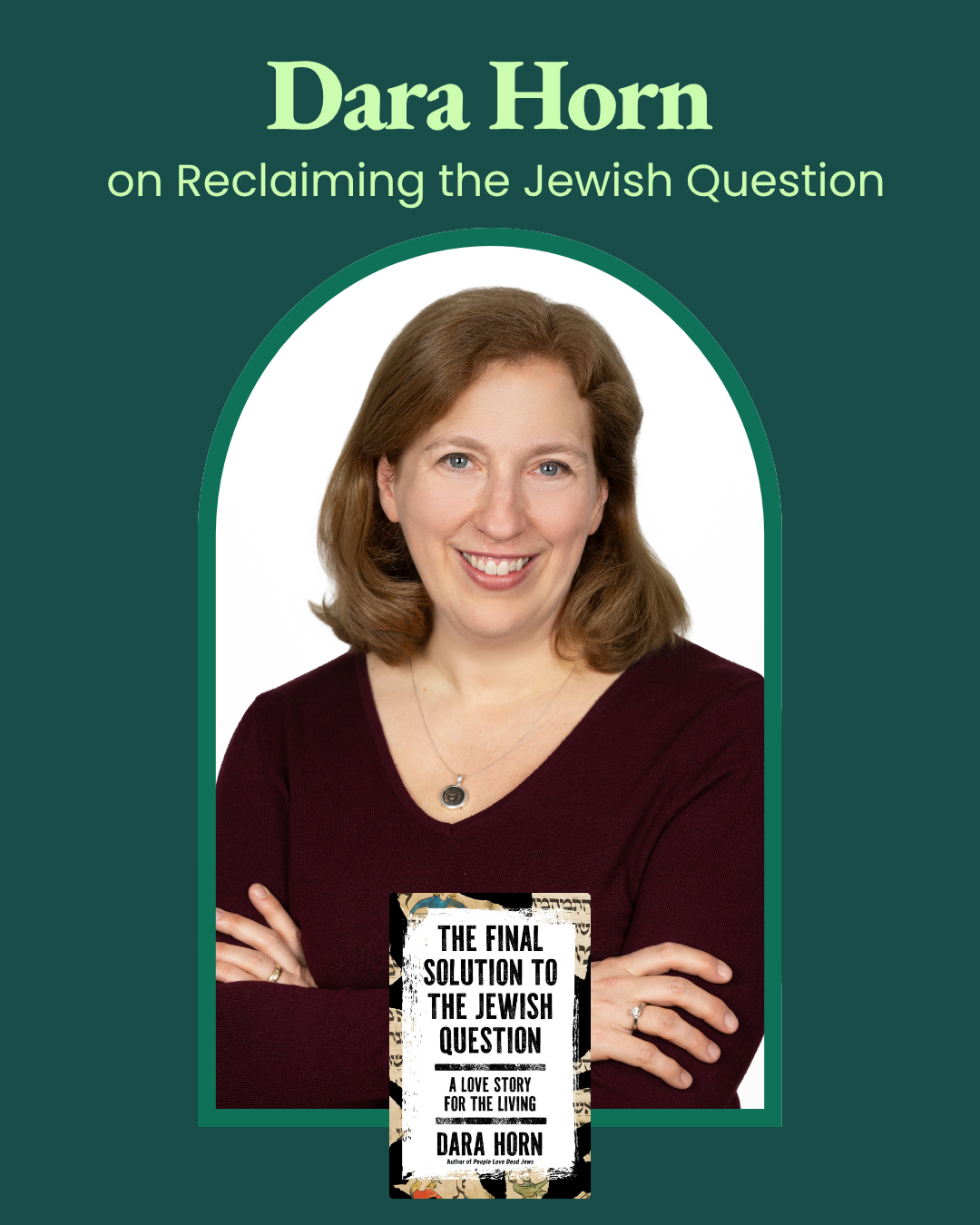
Episode 56: Dara Horn
After publishing her essay collection People Love Dead Jews, Dara Horn found her inbox flooded with messages from readers about their own experiences of anti-semitism. She realized that her readers wanted her to come up with an answer to all the problems she had raised. Her response is in her latest book, The Final Solution to the Jewish Question: A Love Story for the Living. In this conversation, Dara explains why reading Yiddish works are critical to understanding the Holocaust. We also discuss the internalized antisemitism that both she and Sarah Hurwitz explore in their latest works, what she’s learned from Natan Sharansky, and how we should teach about Judaism as an anti-tyrannical movement.
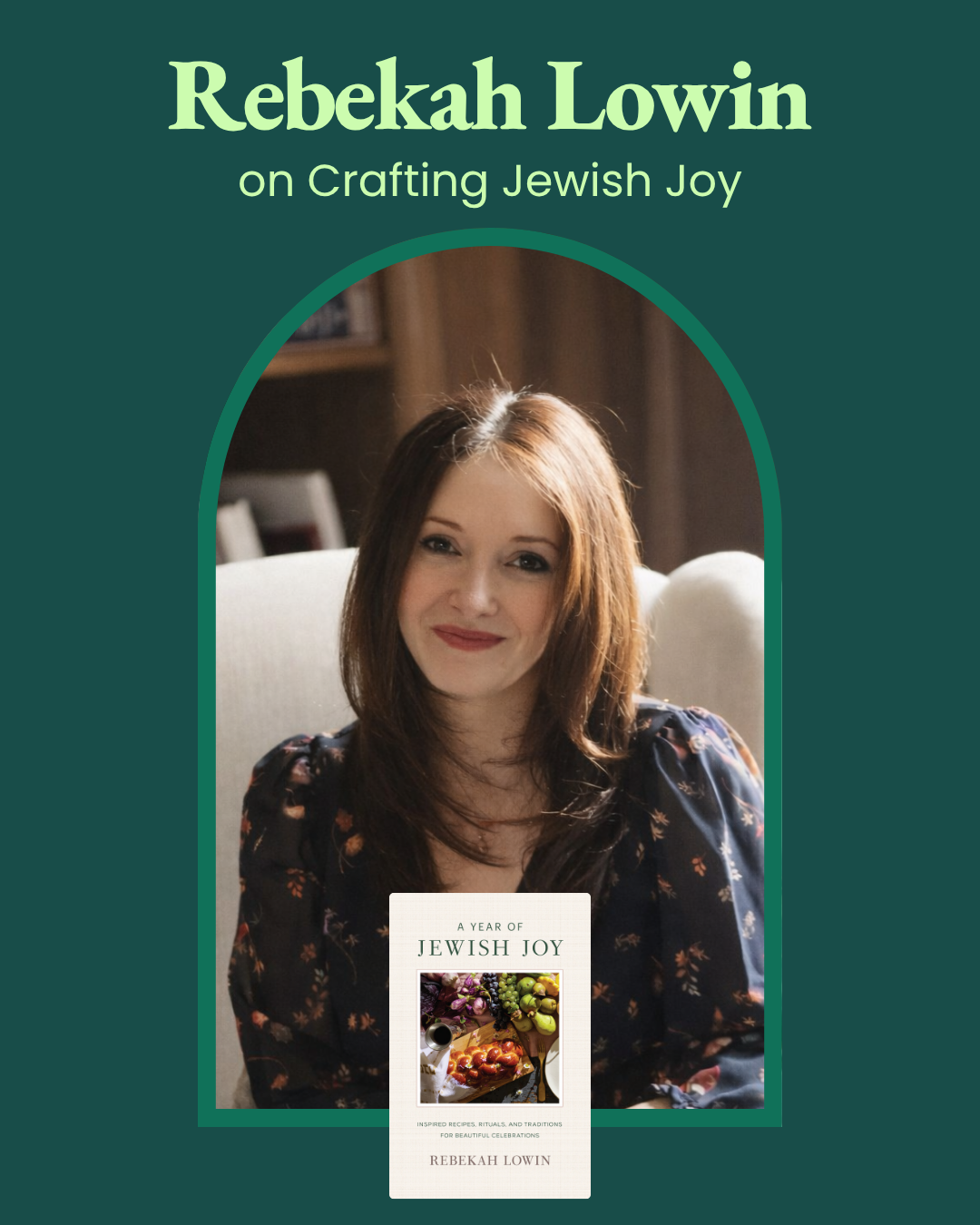
Episode 55: Rebekah Lowin
With the Jewish holiday season fast approaching, many of us are thinking about holiday hosting. Rebekah Lowin has you covered: a challah recipe, an apple themed tablescape, an etrog mold dupe, and a Yom Kippur break-fast recovery packet for your guests. In this episode, Rebekah tells us about she became the Jewish Martha Stewart, reflecting on both her time working at Martha Stewart Living, and growing up in an artistic Jewish home, where her grandfather built a wooden sukkah that her family still uses and her Broadway actress mother sewed its draperies. She also talks about what it was like growing up without a Jewish community, and the unexpected impact of reading the children’s book Hershel and the Hanukkah Goblins.
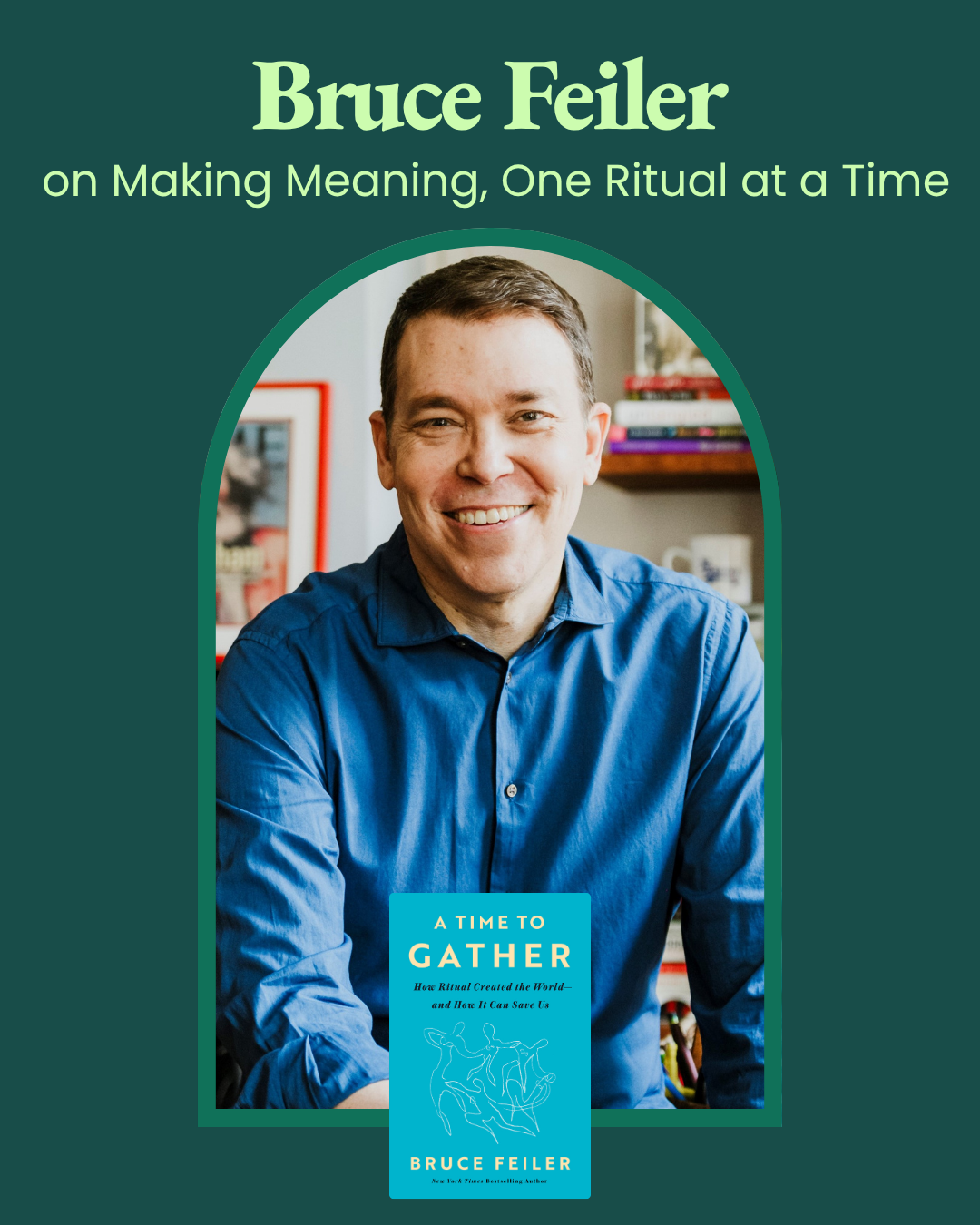
Episode 54: Bruce Feiler
Bruce Feiler speaks to us about the relationship between storytelling and ritual — and why both are essential tools for navigating change, creating meaning and building connection. We also discuss the moments when life takes a difficult turn (“lifequakes” as Bruce calls them), his journey walking the Bible and how it stems from his “rootedness” as a Southern Jew, and the ongoing tension between innovation and tradition at the heart of Jewish life.
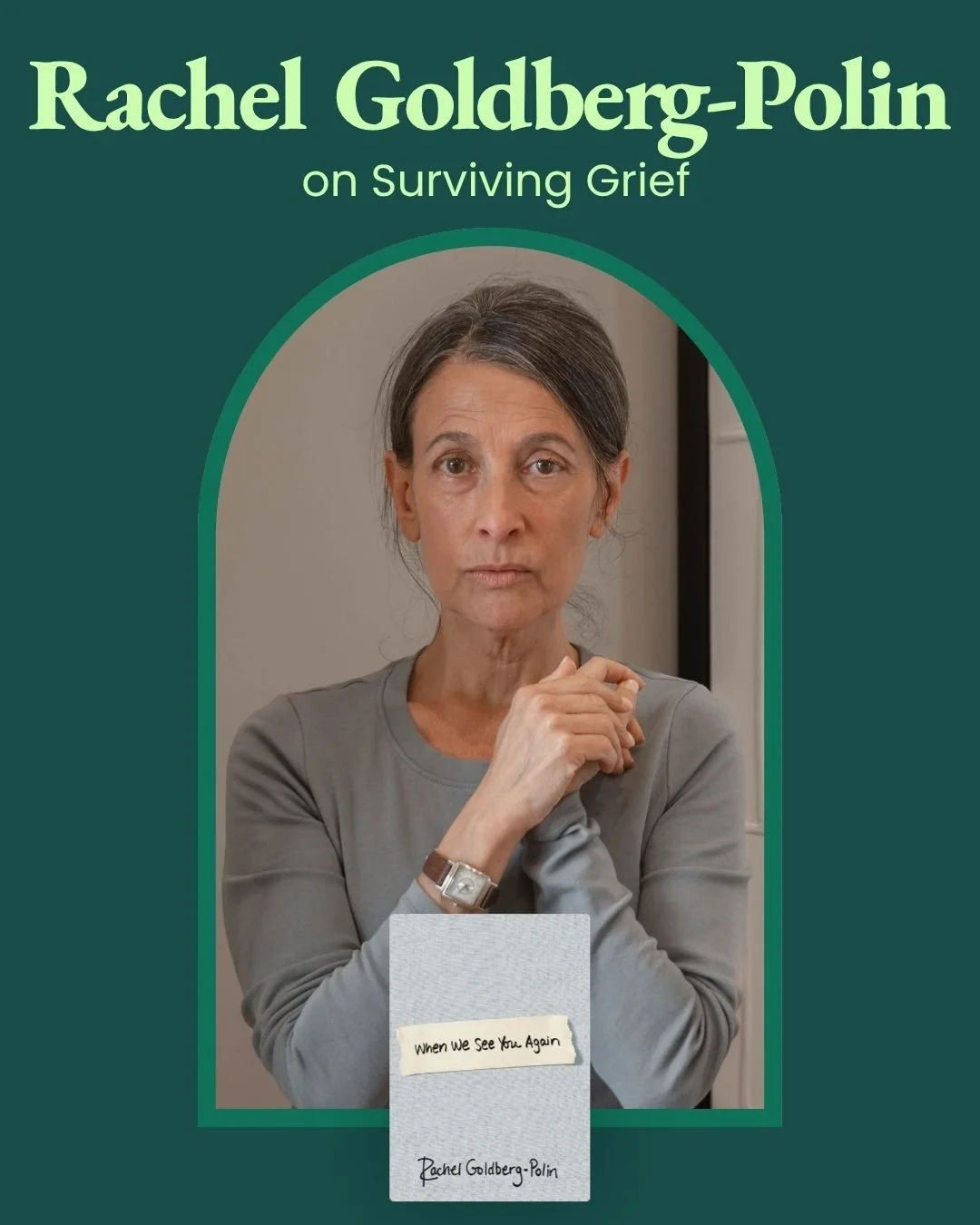
Episode 53: Rachel Goldberg-Polin
Rachel speaks to us about the books that shaped her faith, and the ones that offer reprieve and consolation. We also discuss reading Victor Frankl’s Man’s Search for Meaning after her son Hersh’s death, grief in the poetry of Robert Frost, and Rachel’s hope of finding Shabbat again.
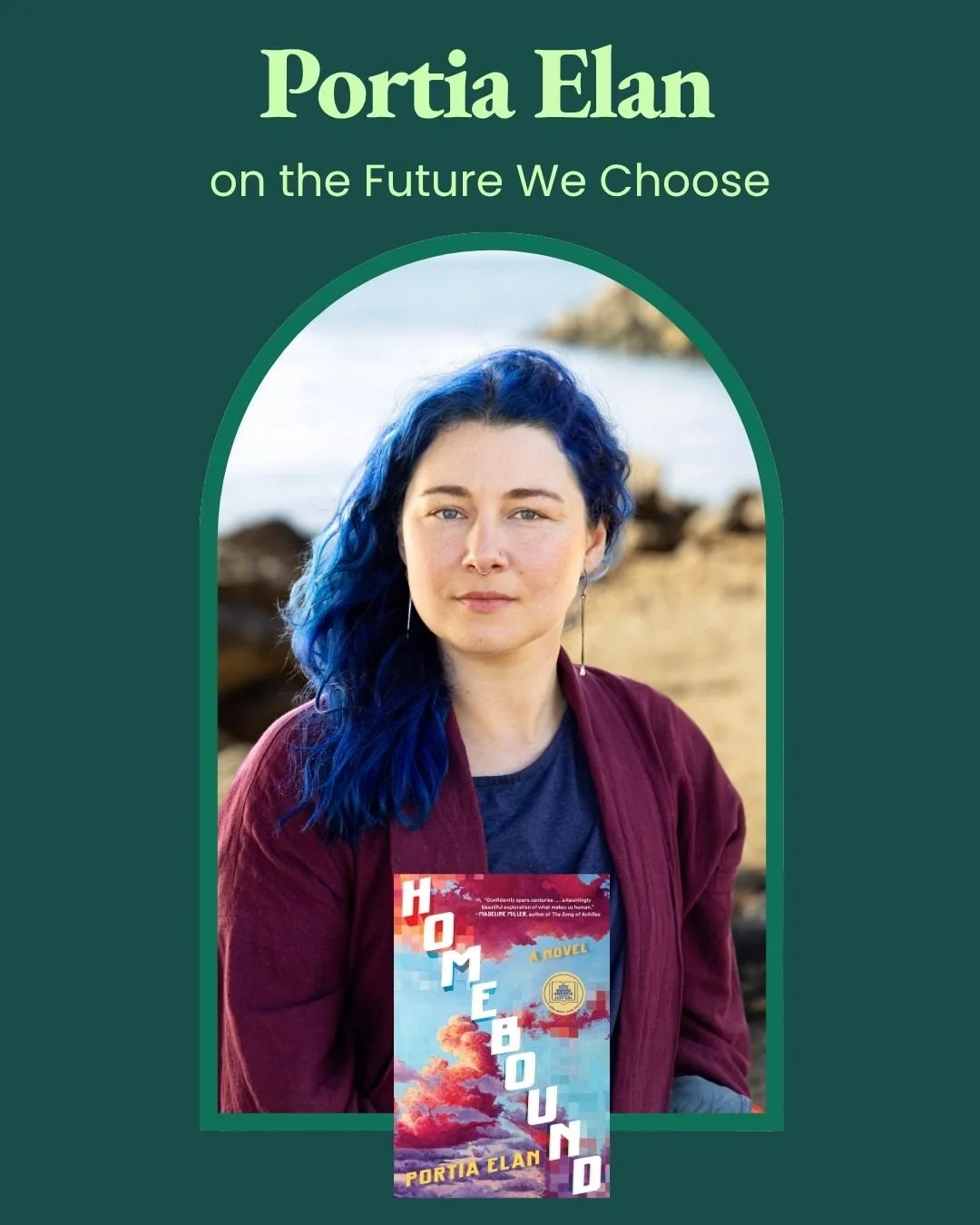
Episode 52: Portia Elan
Portia Elan tells us about her journey to become a Jew by choice after attending Friday night services and feeling that she had “come home.” We also discuss her fascination with the AIDS quilt as a child, and the beauty in finding queer elders in her synagogue. Portia also reflects on how she understands tikkun olam, rooted in how we care for others and in our responsibility to the balance of entire ecosystems.
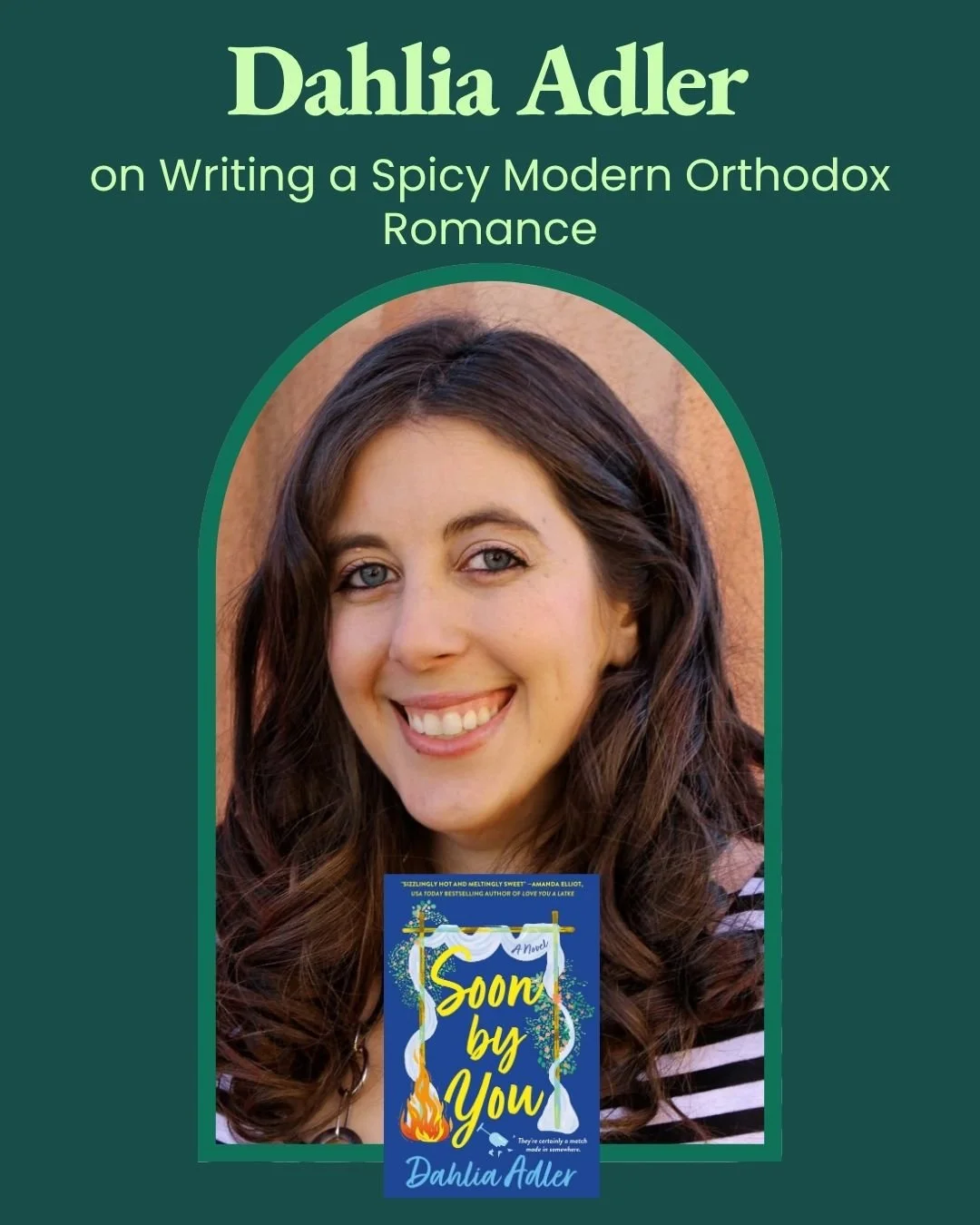
Episode 51: Dahlia Adler
In this conversation, Dahlia Adler discusses the emotional and cultural terrain of love, identity, and storytelling within and beyond the Modern Orthodox world. We explore the particular pressures and expectations around romance in a community where shared values, observance, and belief are foundational. Dahlia also reflects on her unexpected journey to understanding her own bisexual identity as a result of writing a sapphic romance. And we explore her deep love of flawed characters - from Biblical women, to her own protagonists and her commitment to rendering them with empathy, context and moral complexity.
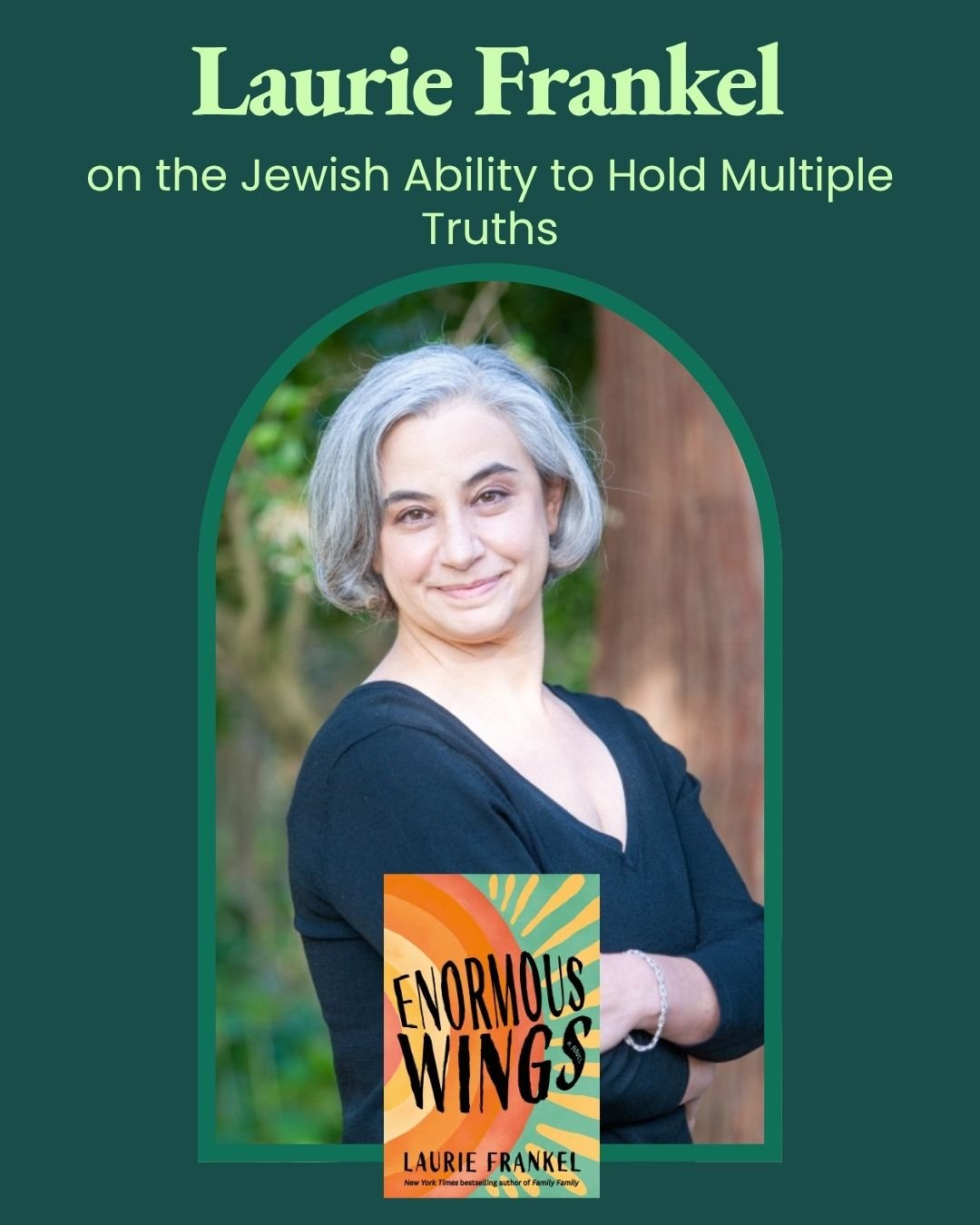
Episode 50: Laurie Frankel
Is two Jews, three opinions a good thing? In this episode, Laurie Frankel discusses the very Jewish capacity of holding space for many different ideas and views, and how this capacity might be exactly what we need in this moment. We’ll also discuss the power and devastation of Cythnia Ozick’s short story “The Shawl,” its contribution to the conversation around trauma, and how a difficult-to-believe premise followed by realism (like that in Naomi Alderman’s The Power) is one of Laurie’s favorite structures for fiction.
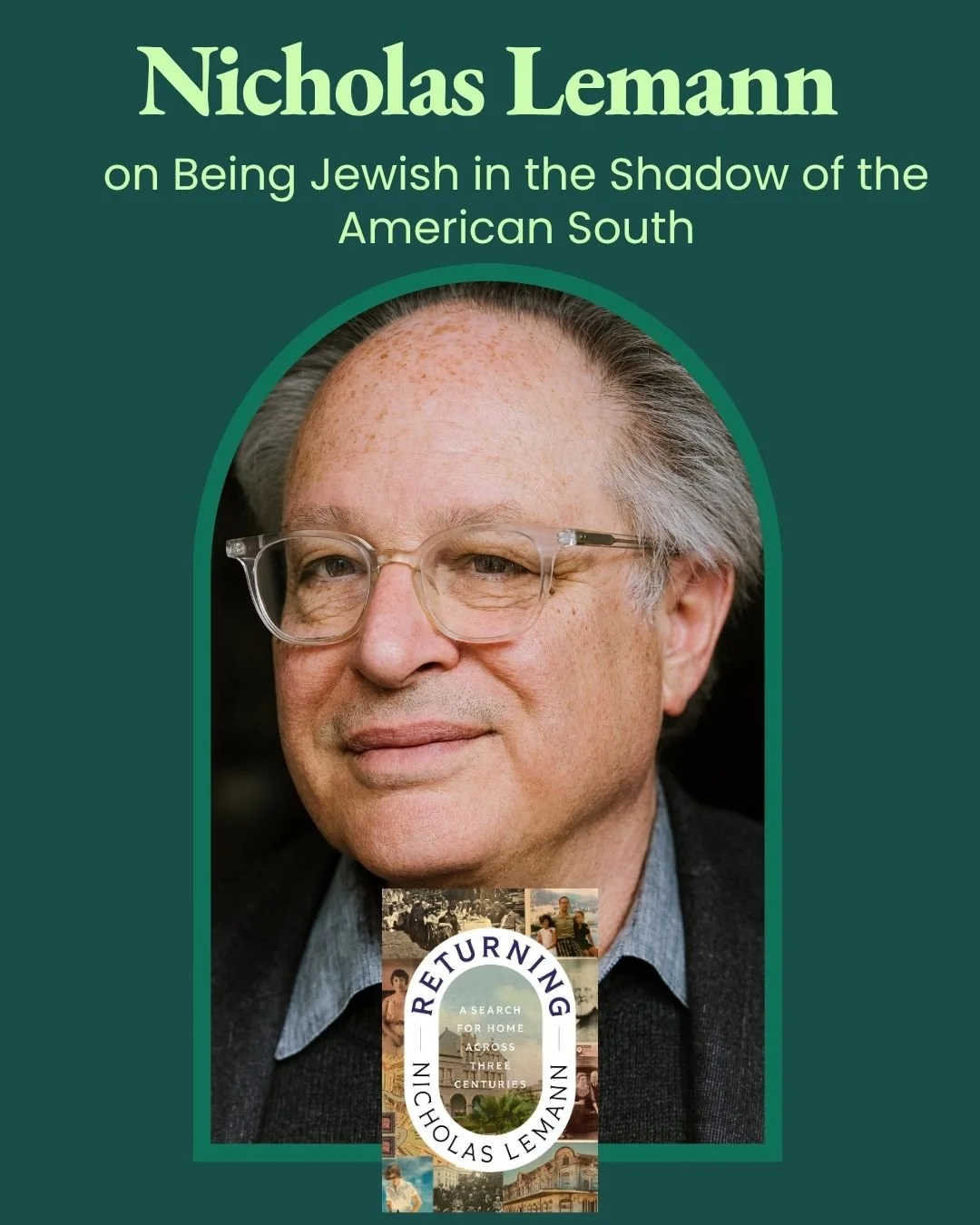
Episode 49: Nicholas Lemann
In recognition of Jewish Heritage Month, this episode features a conversation with Nicholas Lemann, whose work and life story open up questions about both American and Jewish identity. Nicholas discusses his assimilated Louisianan/German-Jewish upbringing and his lifelong quest for connection with Judaism. What does it mean to be both Jewish and have ancestors who benefitted from slavery? We’ll also discuss what Tolstoy’s Russia has in common with the New Orleans of Nicholas’ childhood, and his appreciation for reading the Torah in all its moral complexity.
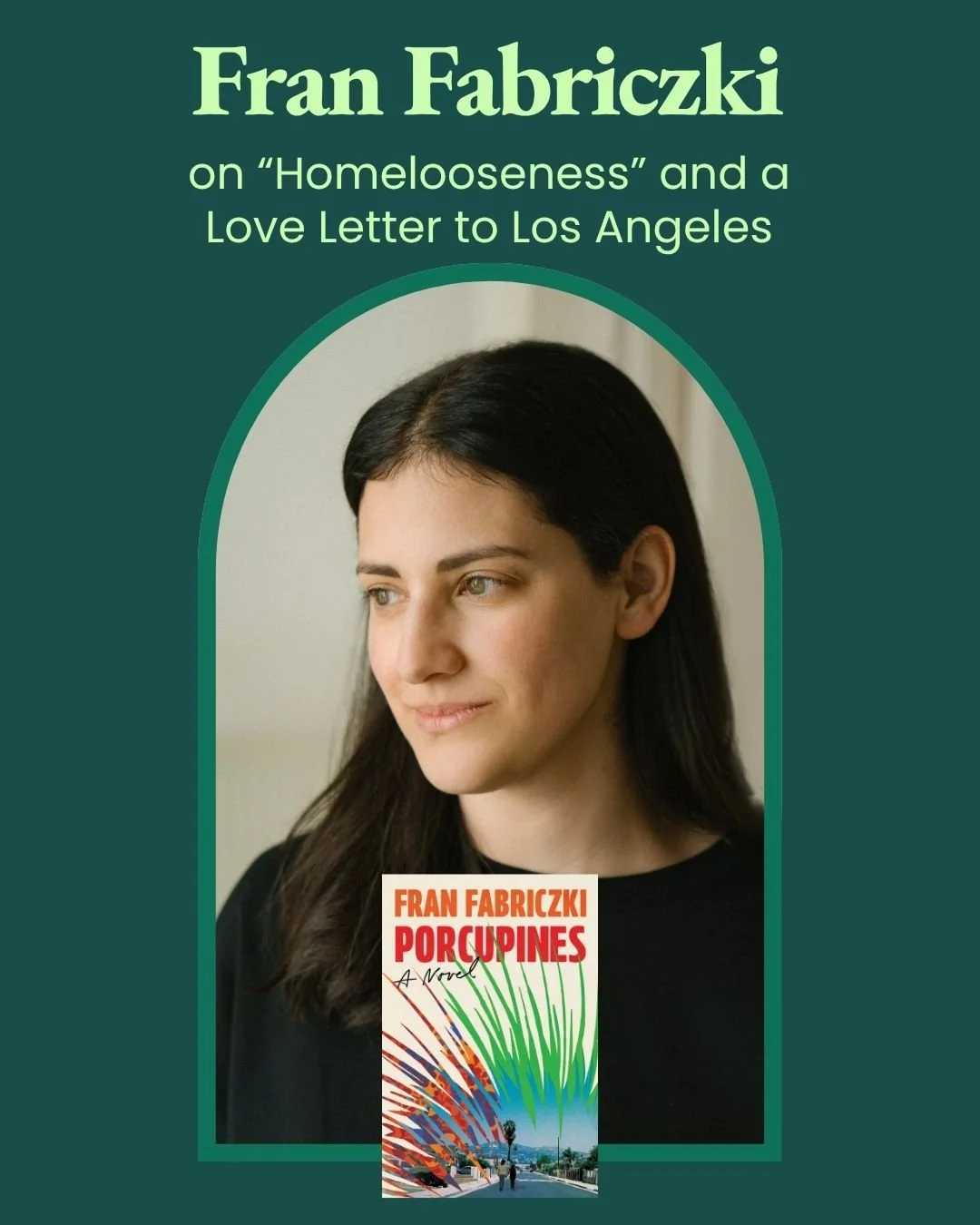
Episode 48: Fran Fabriczki
In this conversation, Fran Fabriczki discusses coming of age between Hungary and Los Angeles and her experiences with cultural richness and antisemitism between the two countries. We also discuss “homelooseness” in The Nearest Thing to Life by James Wood, and JD Salinger’s relationship with Jewishness through his short story “Down at the Dinghy.”
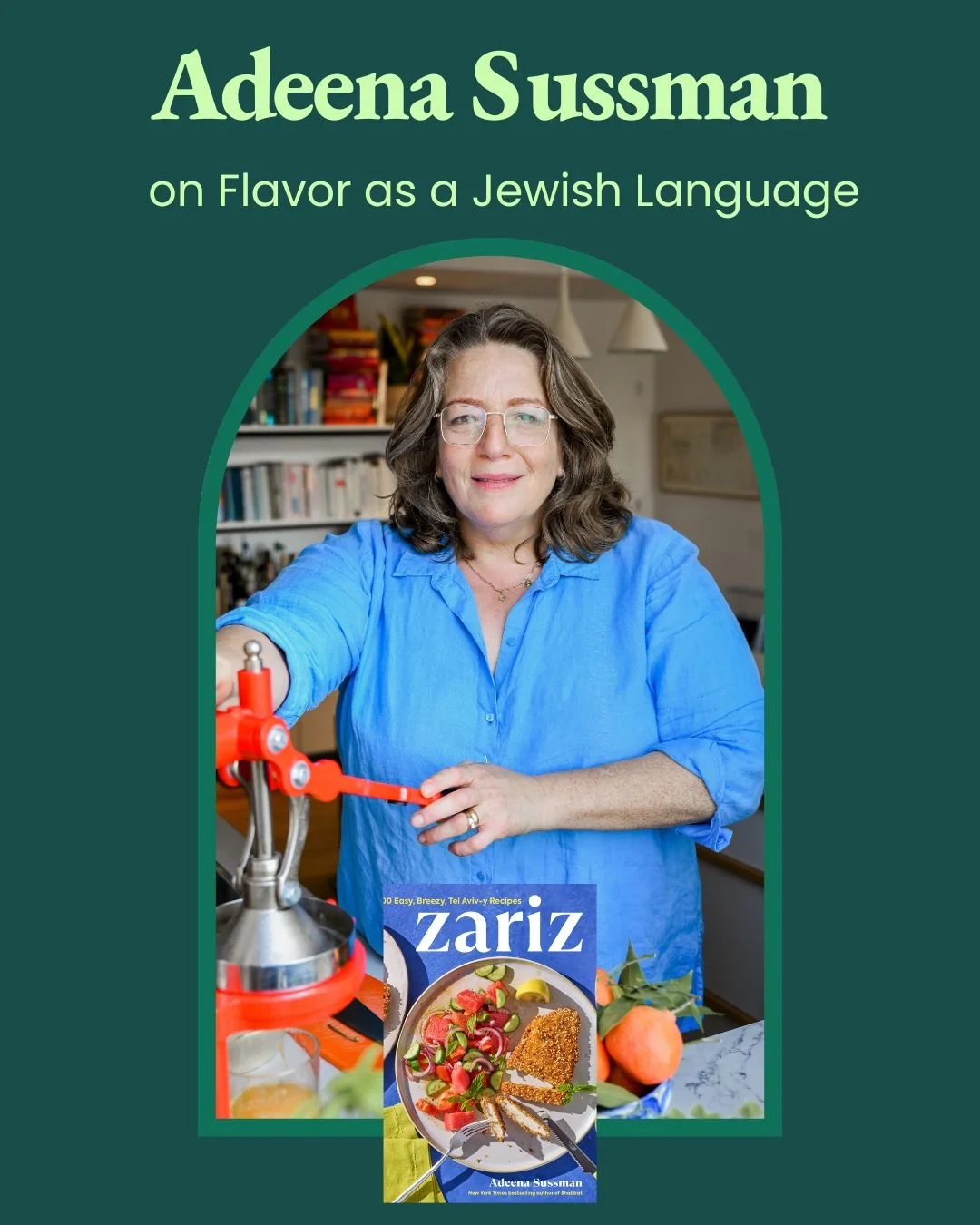
Episode 47: Adeena Sussman
In this conversation, Adeena Sussman discusses how reading an (age-inappropriate) short story by Isaac Bashevis Singer one Shabbat afternoon changed the way she thought about writing and storytelling. We’ll also hear about her deep attachment to Tel Aviv’s Carmel Market, and how discovering Claudia Roden’s writing about Middle Eastern food expanded her sense of Jewish food.
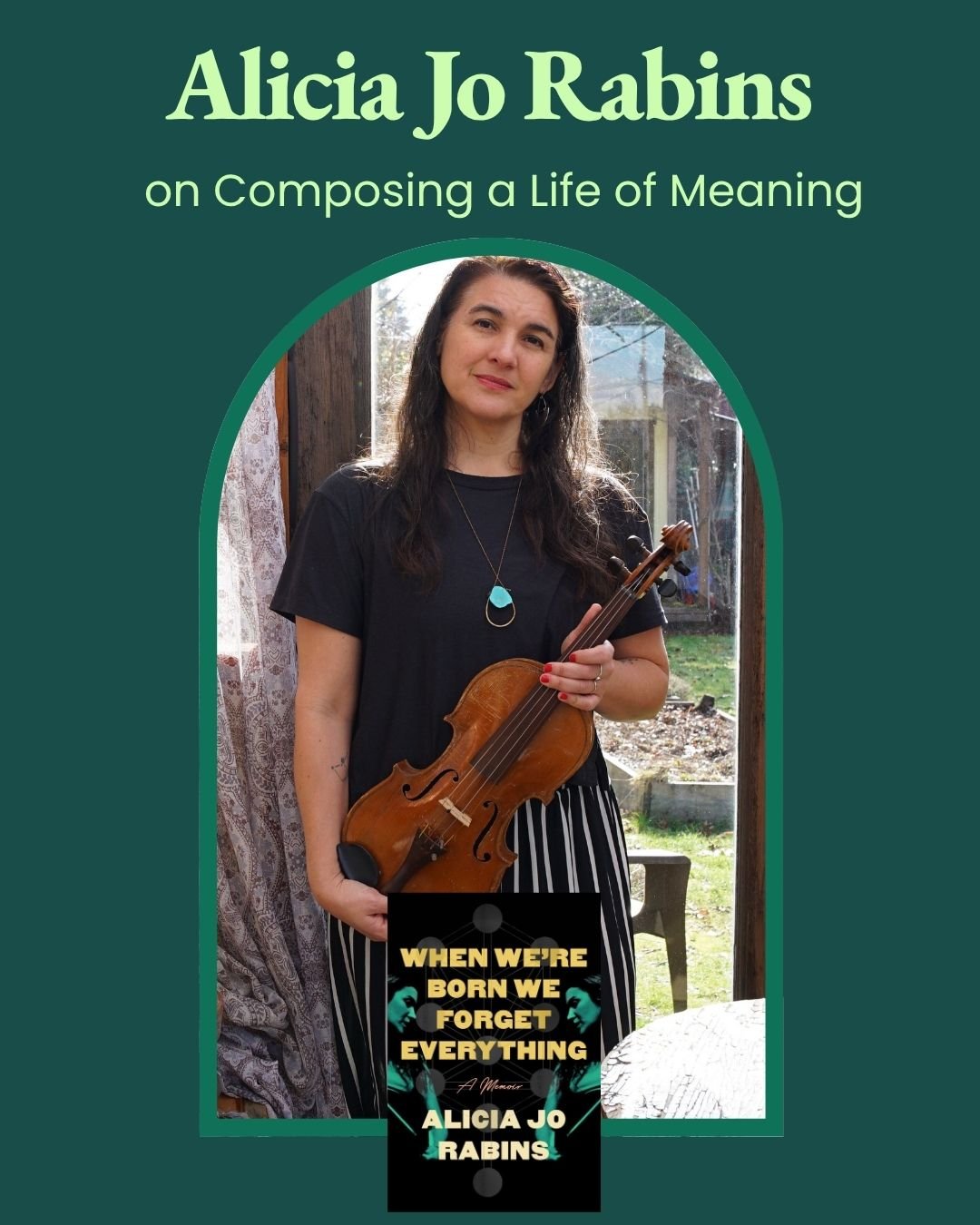
Episode 46: Alicia Jo Rabins
In this episode, Alicia Jo Rabins traces the “red hot glow” of the moments that shaped her, both spiritual and artistic, and how they led her to a life rooted in music, text, and ritual. She’ll tell us how a chavruta (study partnership) with an Orthodox student while at Barnard College paved the way for her to transform her academic study into song in Girls in Trouble. As she details the pendulum swings in her religious and spiritual practices, we discuss the ways in which small moments – watching orthodox women wait for the electric doors to open on Shabbat, watching Titanic – have helped her to build a life and tradition wholly her own.
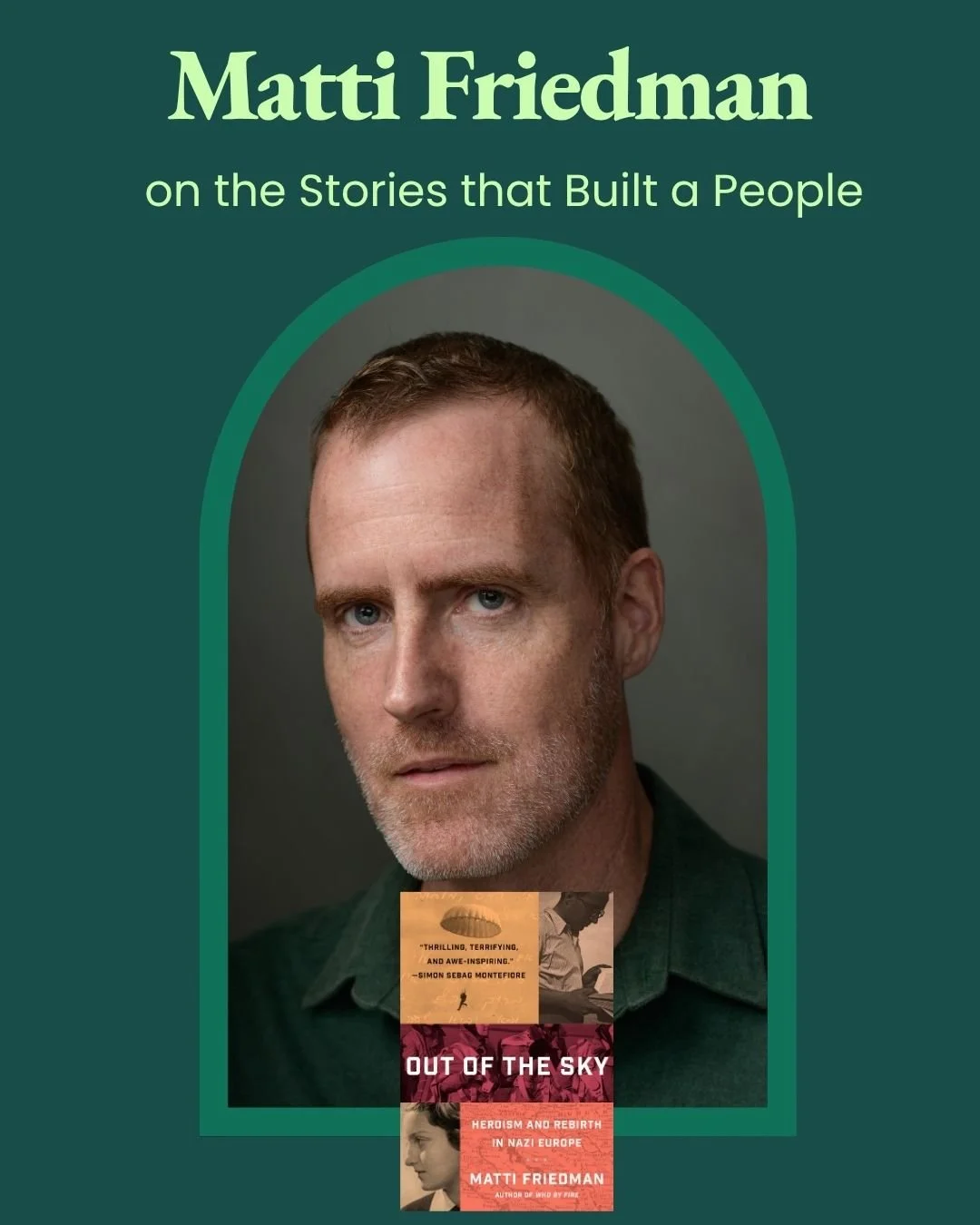
Episode 45: Matti Friedman
In this conversation, Matti Friedman reflects on the power of foundation stories to shape how we understand ourselves and where we come from – from Noah’s Ark, to the origins of the Bible, to Hannah Senesh and the other parachutists who landed in Nazi Europe during World War II. We also talk about what happens when we look more closely at these myths and encounter the flawed, human figures behind them - and why that often deepens, rather than diminishes, our admiration for their courage. Along the way, we also discuss Matti’s particular perspective as a Western-born journalist living in Israel, Michel Houellebecq’s Submission, and the gift of reading poetry in uncertain times.